
Hamis Oil · 2026–2030
Hami's Oil
A palm mill at Elele, led by Hamilton Wuzor. Quik Payment Limited brings investors to it through QuikVest.
$21,333
raised of $50,000
$28,667
still open
348
cans of 25 L made
15 ha
of palm acquired
The offer
Capital back, plus 30%, within 30 months.
That is what the Hamis Oil plan writes for this $50,000 raise. It is not an 8, 10, or 12 month pool, and it is not a guarantee. Fruit, the mill, and the selling price have to meet it. A harvest can miss.
$28,667 still to raise, for machines, fruit, and the first year of labour.
Year 1
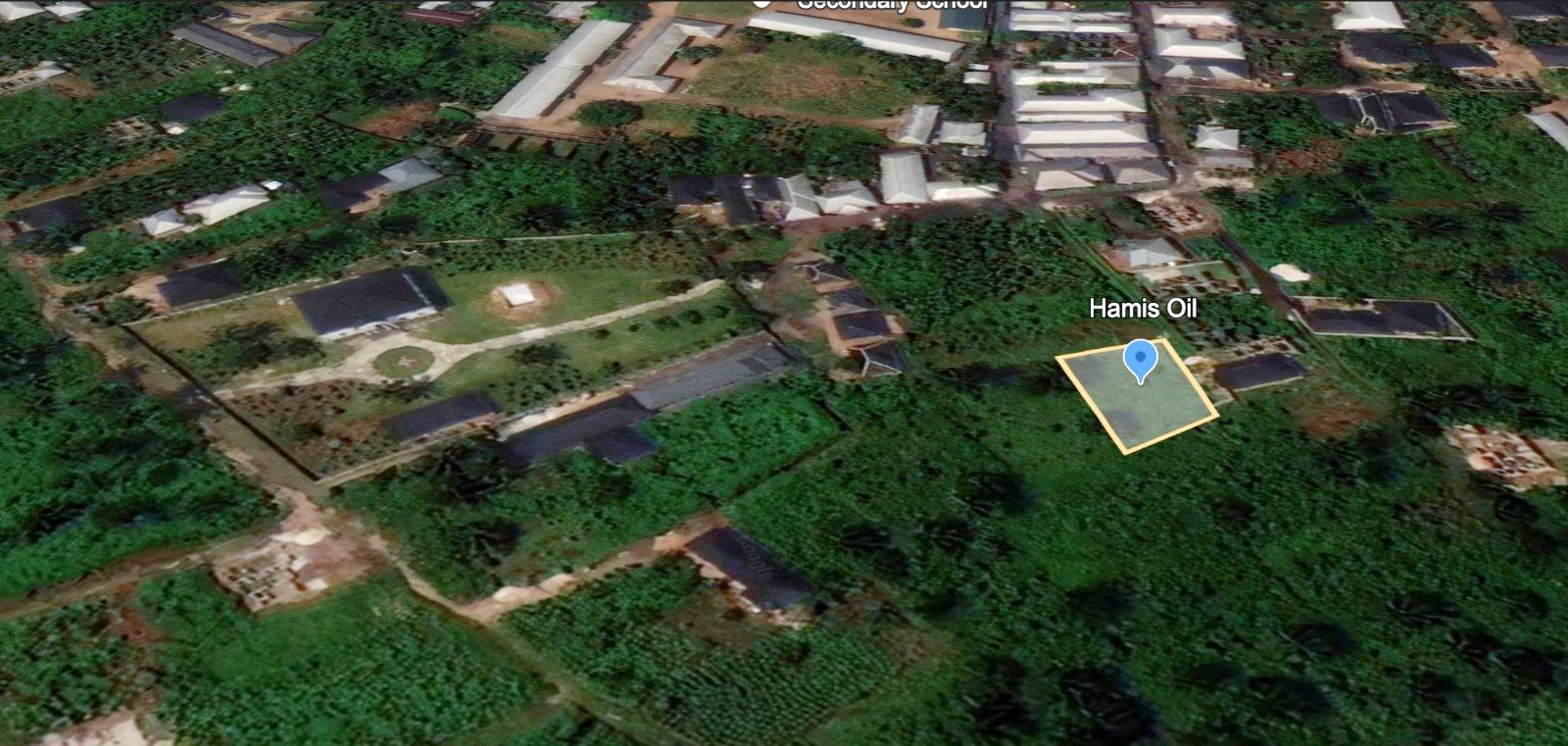
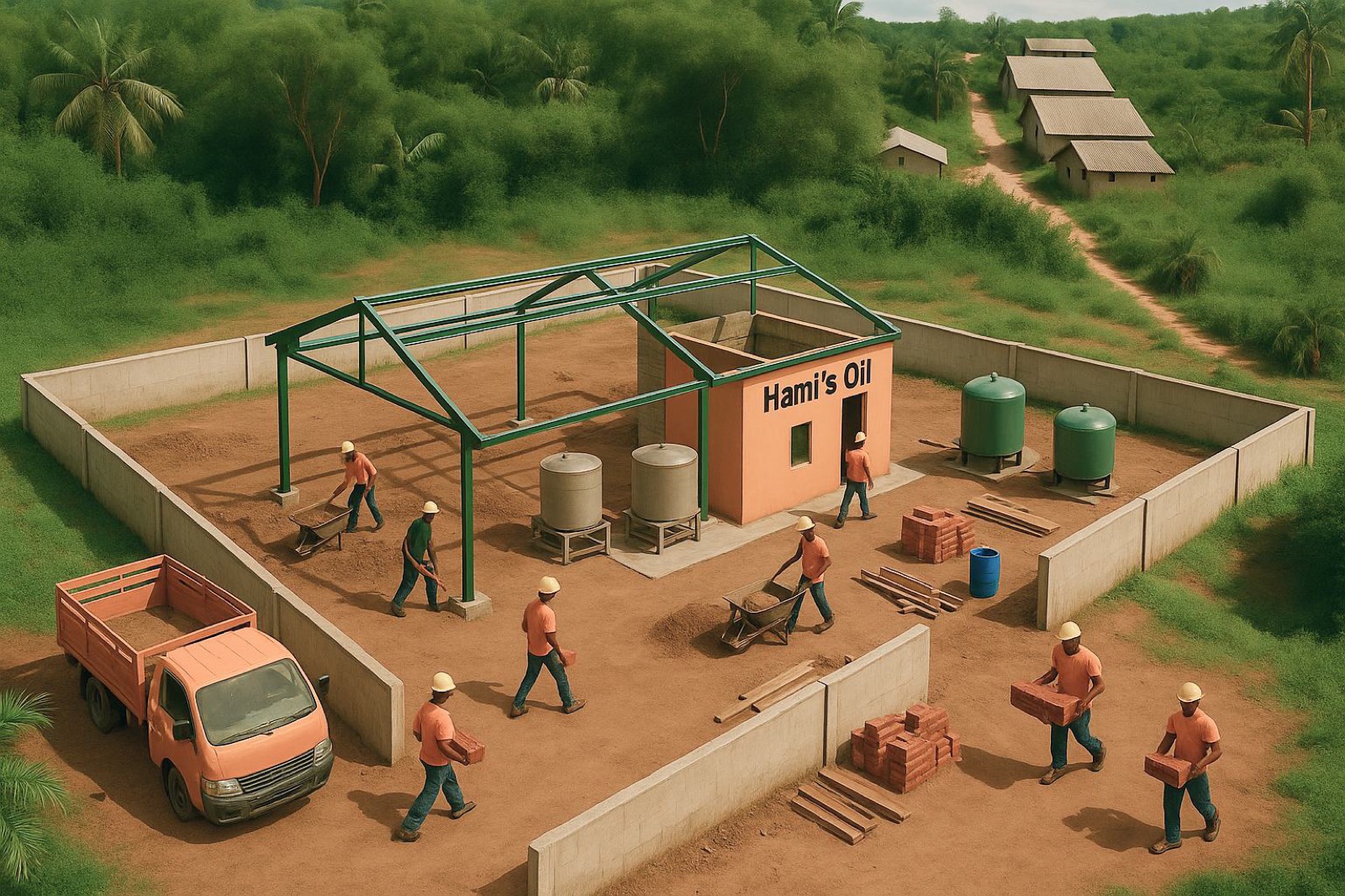
The yard going up
The first mill
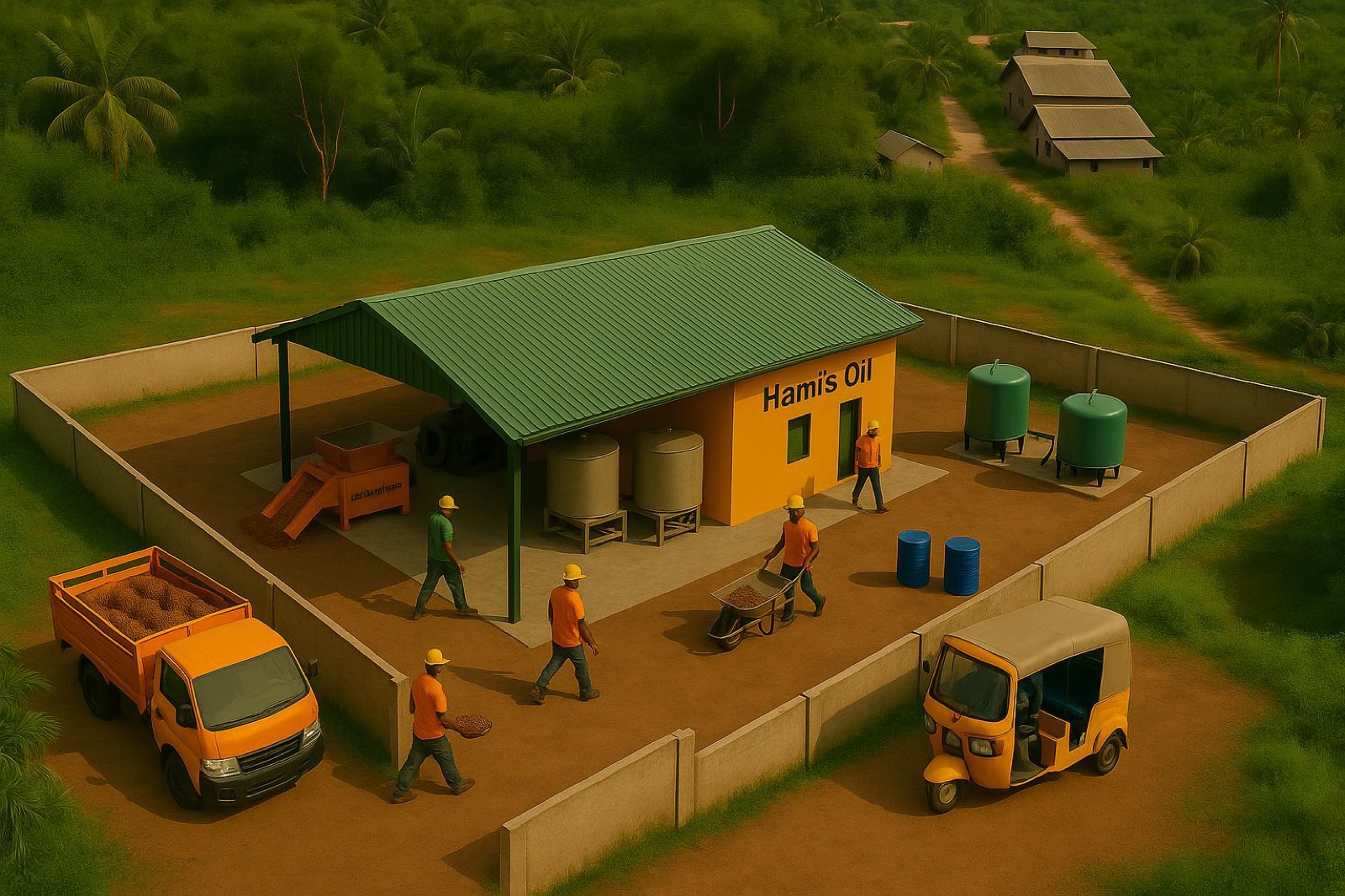
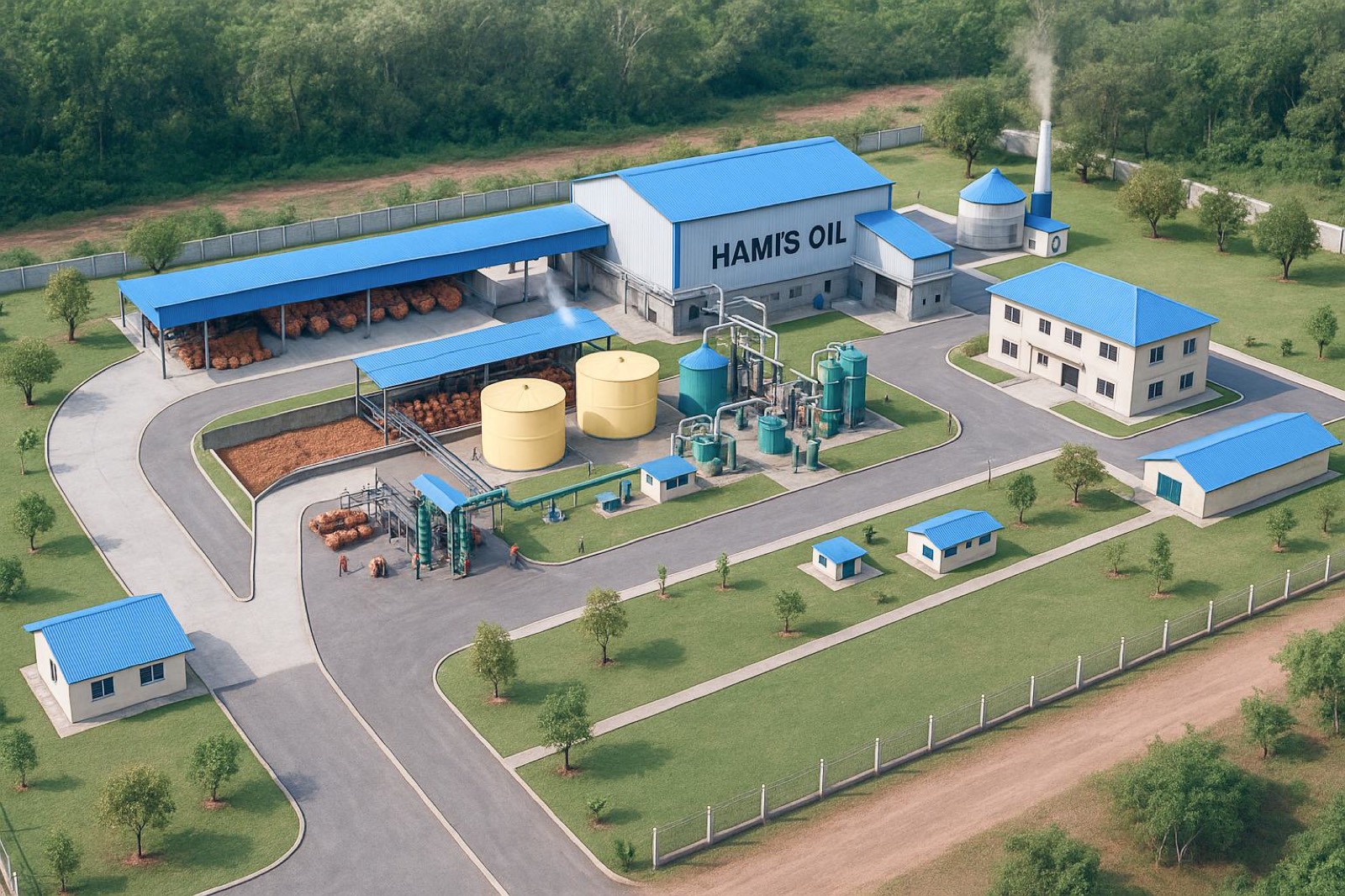
As the plan draws it
These are drawings from the plan, not photographs of a finished factory. Oil is already being made. The line has not reached the 1,500 cans written for this year.
348 cans of 25 L so far, of 1,500
$31,320 if those cans sell at $90 in Houston. Stock, not cash.
The land
15 hectares, already in hand.
The written plan put land in year 2. Hamis acquired this plantation in year 1. The green line is the boundary. The dark canopy inside it is the palms. Harvest on that land is planned to start this year, and that fruit is for the second year of production. Until then, the mill takes fruit from smallholders.
Pin 5°13′11.8″N, 6°54′19″E
Open the pin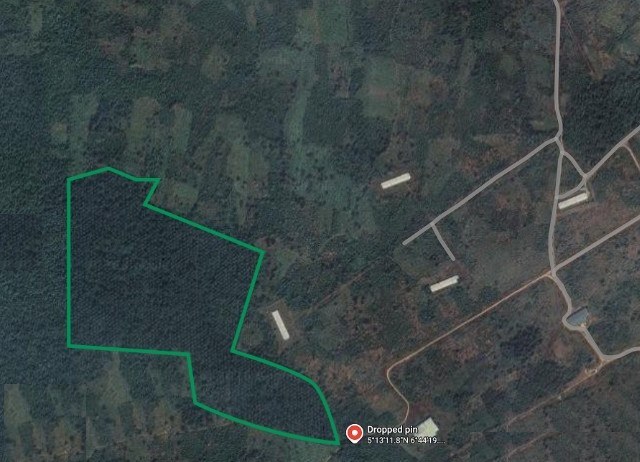
What gets sold
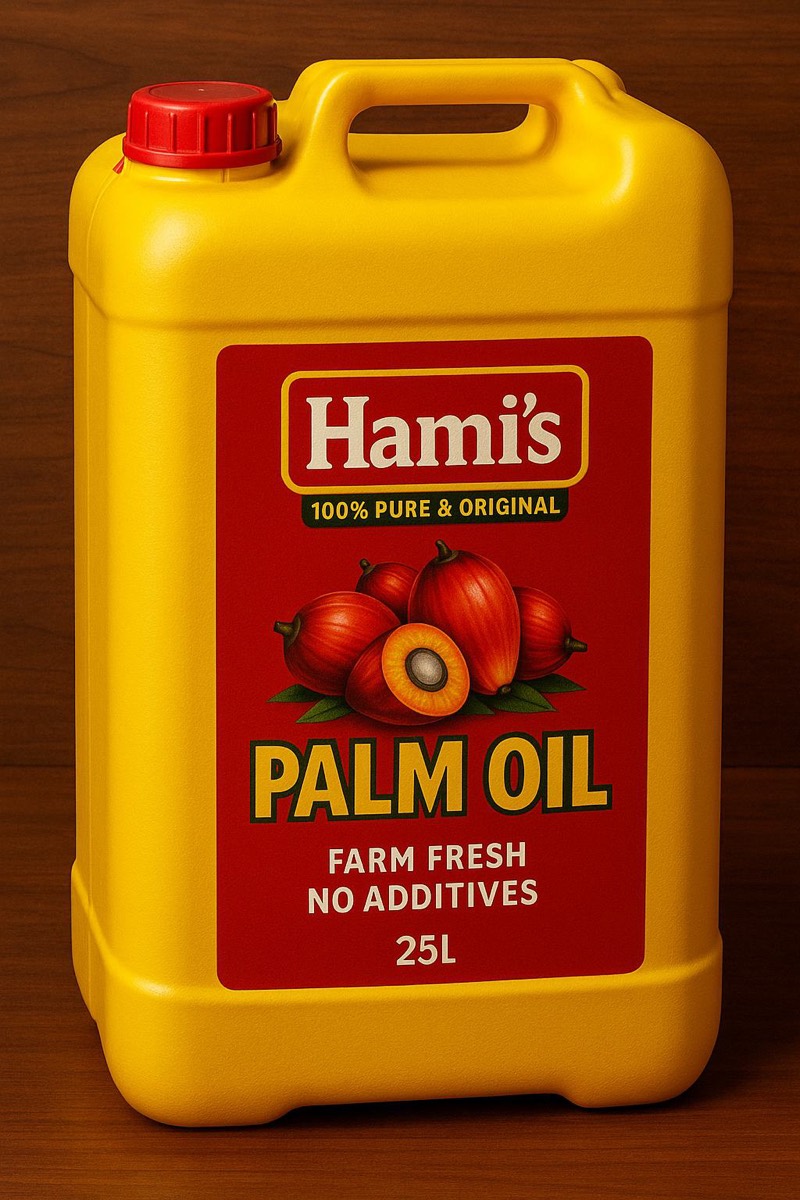
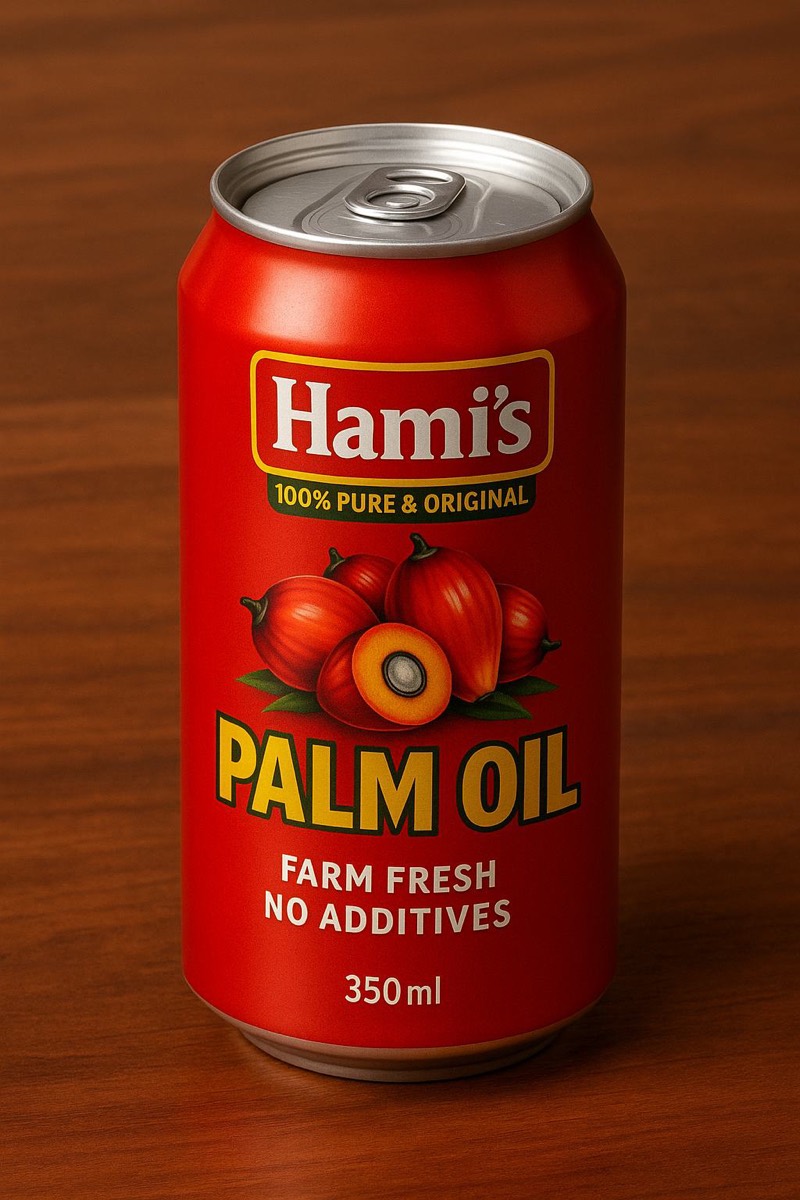
The 25 litre can carries the year.
Crude palm oil first. Kernel oil once the cracker is in. These packs are drawings from the plan, not goods already on a shelf.
Five years, and what is already true.
Year 1
Under way
The raise
$21,333 of the $50,000 goal is in. $28,667 is still open. The plan uses that sum for machines, the first fruit, and the first year of labour.
Year 1
Done
First oil
About 348 cans of 25 litres have been produced from the money raised. The written target for the year was 1,500 cans.
Year 1
Done
Stock on hand
A 25 litre can sells for $90 in Houston. At that price, 348 cans are worth $31,320. That is the stock, not cash in the bank.
Year 1
Under way
The 1-ton line
Oil is being made. The line has not reached the 1,500 cans written for this year, so this milestone stays open.
Year 2
Ahead of the plan
Plantation
15 hectares of palm were acquired in the first year. The written plan put land in year 2. Harvest on that land is planned to start this year, and that fruit is for the second year of production.
Year 2
Not yet
More fruit, kernel oil, and a truck
The plan then widens the farmer network, adds a cargo tricycle and a pickup, cracks kernels, and starts palm-kernel oil and cake.
Year 3
Not yet
A larger line
Upgrade toward 3 tons an hour, a fuller waste-to-energy plant, and tighter control of free fatty acid. Refinery planning starts.
Year 4
Not yet
Refinery groundwork
Land and tanks for a CP10 and CP8 refinery, a boiler upgrade, and contracts with breweries, food companies, and exporters.
Year 5
Not yet
300,000 litres
Commission the refinery, pack 1 L to 25 L, and sell refined oil to shops and bulk buyers. The plan’s farmer network is 400 or more by then.
Year 5 in the plan
300,000 litres, if the years land.
2026, if the year had been the full 1,500 cans.
This is the plan’s projection. It is not the 348 cans already made. Cost in the plan is $16 a can, $24,000 for 1,500.
| Product | Quantity | Low | Mid | High |
|---|---|---|---|---|
| 25 L palm oil | 1,500 | $36,000 | $49,000 | $64,000 |
| 350 ml palm oil | 288 | $576 | $576 | $576 |
| 10 ml palm oil | 220,000 | $13,200 | $13,200 | $13,200 |
| Revenue in the plan | $49,776 | $62,776 | $77,776 | |
Low after $24,000
$25,776
Mid after $24,000
$38,776
High after $24,000
$53,776
If the middle year is put back into fruit, the plan’s own path runs 2026, 2027, 2028, 2029, 2030, from $62,776 to $2,267,000. A missed harvest or a weak price breaks that chain. It is the path they wrote, not a forecast.
The raise is still open
If you want in, tell the desk.
$28,667 of the $50,000 is still open. Leave your name. This is not a payment, and it does not reserve a place. The desk writes back.